Most chronic and infectious diseases do not begin with visible symptoms. They begin with subtle biochemical changes—often detectable years in advance through routine laboratory testing. Yet despite decades of medical advancement, diagnostic delay remains a systemic problem in the U.S. healthcare ecosystem.
According to data from the Centers for Disease Control and Prevention (CDC, 2023), millions of Americans live with undiagnosed or late-diagnosed conditions such as diabetes, cardiovascular disease, and thyroid disorders, largely due to barriers related to cost, access, and system complexity.
This diagnostic gap represents not only a public-health concern, but also a material risk to healthcare systems, payers, employers, and digital health platforms.
What the Data Reveals About Diagnostic Delay
Large-scale population studies consistently show that:
From an investor and payer perspective, the implication is clear: late detection drives higher acuity, higher cost, and poorer outcomes.
Preventive Diagnostics as a Cost-Containment Strategy
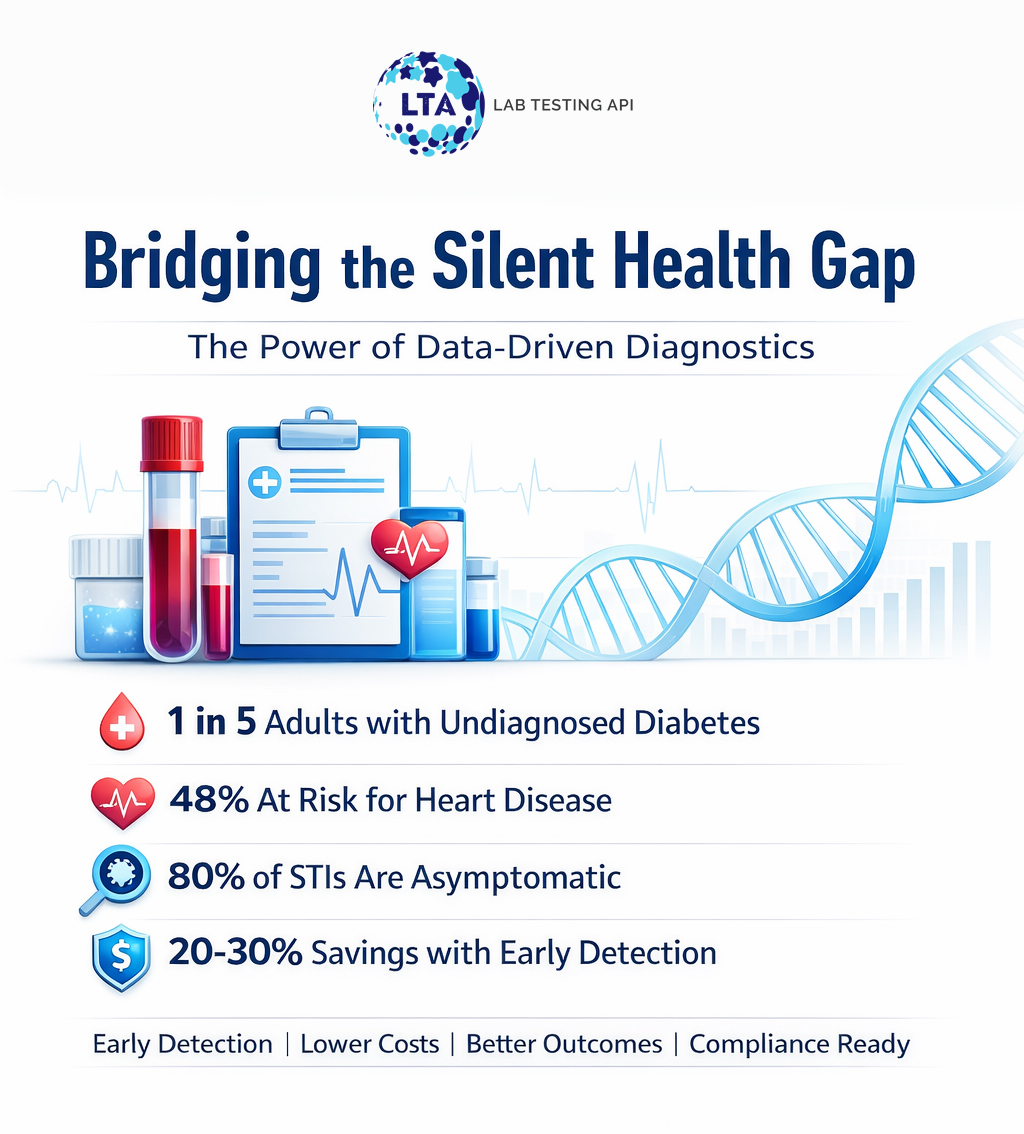
Evidence from the Agency for Healthcare Research and Quality demonstrates that preventive screening and early diagnosis can reduce long-term healthcare expenditure by 20–30% per patient, primarily by avoiding emergency interventions and advanced disease management (AHRQ, 2022).
Similarly, longitudinal research indexed by the National Institutes of Health links early laboratory screening to:
These outcomes directly support value-based care models, employer wellness ROI, and risk-adjusted population health strategies (NIH, 2021).
Why Access Infrastructure Matters More Than Awareness
While clinical guidelines for screening are well established by bodies such as the U.S. Preventive Services Task Force, real-world compliance remains low. Research by the Kaiser Family Foundation shows that Americans most often delay or skip lab testing due to:
This gap between clinical recommendation and execution is where diagnostic infrastructure platforms such as Lab Testing API create measurable system-level value.
Lab Testing API: Infrastructure, Not Just Access
Unlike traditional consumer lab ordering, Lab Testing API functions as a diagnostic enablement layer—supporting:
All testing is fulfilled through CLIA-certified laboratory partners, in alignment with oversight standards set by the Centers for Medicare & Medicaid Services (CMS, 2024).
From a compliance standpoint, data handling and privacy controls are structured to meet HIPAA Privacy and Security Rule requirements as defined by the U.S. Department of Health & Human Services (HHS, 2023).
Consumer Behavior Is Shifting—Healthcare Must Follow
Digital health adoption trends analyzed by the Pew Research Center indicate rising consumer preference for:
For B2B partners, this shift translates into competitive pressure: platforms that fail to integrate convenient, compliant diagnostics risk losing engagement, retention, and lifetime value.
Strategic Implications for Investors and Enterprise Partners
From an enterprise and investor lens, modern diagnostics infrastructure delivers:
Early testing is no longer a “preventive add-on.”
It is a core operational lever for sustainable healthcare delivery.
Conclusion: Data-Led Care Begins With Early Testing
The strongest healthcare systems of the next decade will not be reactive. They will be predictive, preventive, and digitally integrated.
By lowering friction to testing while maintaining strict regulatory compliance, Lab Testing API enables healthcare organizations to move diagnostics upstream—where outcomes improve and costs decline.
References